Introduction
For European Rail Infrastructure Managers, 2025 was a year of strategic opportunity, marked by intensified EU legislative and policy activity directly affecting all European rail infrastructure members.
At the financial level, the European Commission presented its proposal for the next Multiannual Financial Framework (MFF 2028–2034). Its related programmes, notably the future Connecting Europe Facility (CEF III), will be critical to financing rail infrastructure, cross-border connectivity, digitalisation, and investments in dual-use and resilient assets. Throughout the year, EIM actively engaged with EU institutions and the wider transport sector to advocate for long-term, stable and scalable funding mechanisms that reflect the strategic role of rail infrastructure.
In parallel, the EU increased its focus on accelerating infrastructure investment. In the rail sector, this translated into discussions on how to streamline funding and financing procedures and reduce delivery timelines. During the Implementation Dialogue with Transport Commissioner Tzitzikostas, EIM President Miguel Cruz advocated the need to systematically address cost drivers and administrative barriers, building on national best practices, while underlining broader competitiveness concerns and the need for strategic focus and predictability.
On defence and security, the European Commission advanced its agenda with the publication of the Military Mobility Package, including a proposal for a dedicated EU Regulation. It also identified dual-use TEN-T corridors and defined four military mobility corridors. These developments are highly relevant for infrastructure managers, as they position rail as a key enabler for the efficient, coordinated and secure movement of military personnel and equipment across the EU. In response, EIM and its members established a dedicated internal, multi-layer governance structure on military mobility, covering related aspects such as security, cybersecurity and infrastructure resilience. Work also focused on assessing potential threat scenarios to move from reactive responses to structured, experience-based approaches.
At the political level, the European Commission published its High-Speed Rail Action Plan as part of its broader competitiveness and decarbonisation strategy. The objective is to double high-speed rail traffic by 2030 and triple it by 2050. To support this ambition, the Commission initiated work on a complementary financial strategy to address current funding gaps. EIM and its members are actively contributing to this process, particularly in defining realistic investment conditions and priorities.
On the technical and digital front, the Europe’s Rail Joint Undertaking focused on preparing the deployment of the future railway communication system FRMCS, among others. The High-Level Deployment Group produced draft reports covering technical, legal, financial and migration scenarios’ aspects. EIM and its members are closely involved in this work and will continue to play an active role in the coming years. They also underline the importance of dedicated EU funding to support the transition towards FRMCS as well as the need to sustain innovation through a successor to Europe’s Rail.
Operationally, 2025 marked a major step forward with the provisional agreement between the Council and the European Parliament on rail capacity management. The forthcoming Regulation will introduce significant structural reforms, including a new European governance framework, an enhanced role for regulatory bodies and stronger coordination with rail users. It will also require infrastructure managers to adapt core processes such as timetabling and capacity allocation. EIM and its members have been deeply engaged in shaping this file since its inception in 2023, providing detailed expertise and proposed amendments throughout the negotiations. EIM will continue to support its members during the implementation phase.
In conclusion, 2025 confirmed the strategic relevance of rail infrastructure in Europe. EIM and its members have actively contributed to positioning rail infrastructure as a backbone of Europe’s connectivity, resilience and security, while advancing digitalisation and decarbonisation objectives. At the same time, EIM has further strengthened its role as a credible partner to EU institutions and a coordinating voice for the sector on all levels.
“Europe has set the direction – our task as rail infrastructure managers is to deliver a stronger, smarter and more resilient rail system.”
Miguel Cruz, President of EIM and CEO of IP, Portugal
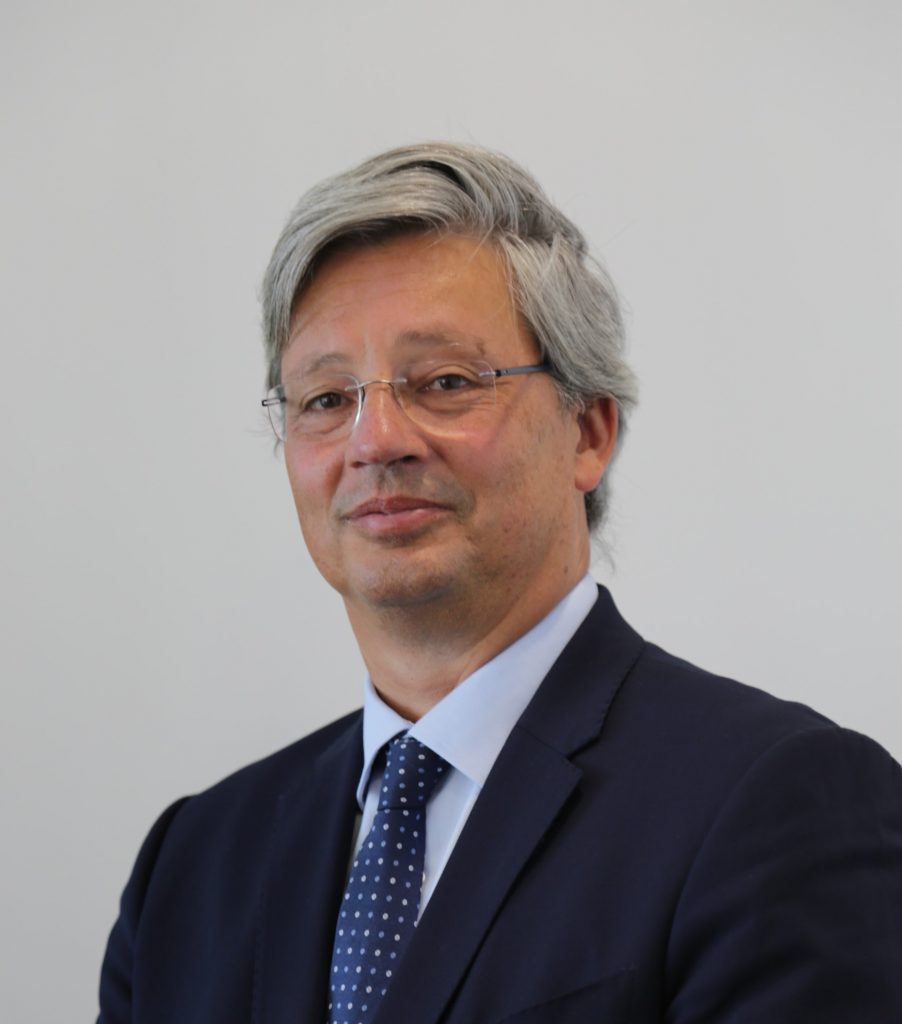
Monika Heiming, Executive Director of EIM